Comfort of My Eyes - Our Prophet ﷺ in Prayer
Description of the quality of the salah of the Prophet ﷺ
Fri Jul 25 2025
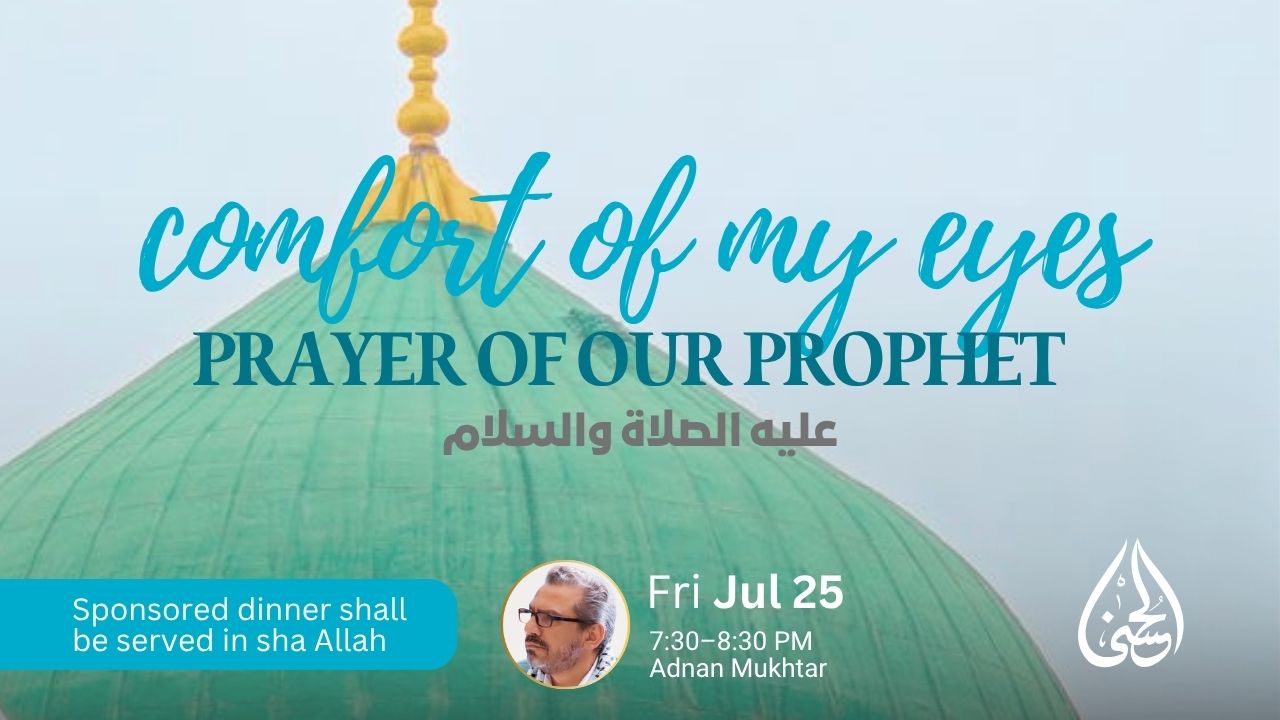
Watch the video: https://youtube.com/live/lcw4U8cf54o
Table of Contents
- Prescription of prayer to the Prophet
- Early revelations
- Learning the Salah
- Salah becoming Fard
- Daily prayers begin
- More commandments to pray
- Rakaat standardized after the Hijrah
- Comfort of his eyes
- His last worry
- His last sajdah
The article illuminates the profound significance of prayer within Islam, particularly through the lens of Prophet Muhammad's ﷺ life. They outline the early divine commands to pray, starting from initial revelations that prescribed glorifying Allah and performing night prayers, and progressing to the establishment of the five daily prayers during the Isra and Miraj. Furthermore, the sources emphasize how prayer served as a source of immense comfort and focus for the Prophet, who engaged in lengthy, heartfelt supplications, even weeping in devotion. Finally, the collection highlights the Prophet's unwavering commitment to prayer throughout his life, including his encouragement for others to observe both obligatory and voluntary prayers, and his final moments being concerned with his community's adherence to it.
Prescription of prayer to the Prophet
Early revelations
First or second Revelation revelation: Surat al-Muddaththir
«سَأَلْتُ أَبَا سَلَمَةَ أَىُّ الْقُرْآنِ أُنْزِلَ قَبْلُ قَالَ يَا أَيُّهَا الْمُدَّثِّرُ فَقُلْتُ أَوِ اقْرَأْ فَقَالَ سَأَلْتُ جَابِرَ بْنَ عَبْدِ اللَّهِ أَىُّ الْقُرْآنِ أُنْزِلَ قَبْلُ قَالَ (يَا أَيُّهَا الْمُدَّثِّرُ) فَقُلْتُ أَوِ (اقْرَأْ) قَالَ جَابِرٌ أُحَدِّثُكُمْ مَا حَدَّثَنَا رَسُولُ اللَّهِ ﷺ قَالَ:
جَاوَرْتُ بِحِرَاءٍ شَهْرًا، فَلَمَّا قَضَيْتُ جِوَارِي نَزَلْتُ فَاسْتَبْطَنْتُ بَطْنَ الْوَادِي، فَنُودِيتُ، فَنَظَرْتُ أَمَامِي وَخَلْفِي وَعَنْ يَمِينِي وَعَنْ شِمَالِي فَلَمْ أَرَ أَحَدًا، ثُمَّ نُودِيتُ فَنَظَرْتُ فَلَمْ أَرَ أَحَدًا
ثُمَّ نُودِيتُ فَرَفَعْتُ رَأْسِي فَإِذَا هُوَ عَلَى الْعَرْشِ فِي الْهَوَاءِ يَعْنِي جِبْرِيلَ ؑ فَأَخَذَتْنِي رَجْفَةٌ شَدِيدَةٌ فَأَتَيْتُ خَدِيجَةَ فَقُلْتُ دَثِّرُونِي فَدَثَّرُونِي فَصَبُّوا عَلَىَّ مَاءً فَأَنْزَلَ اللَّهُ ﷻ …» (مسلم ١٦١d صحيح)
I asked Abu Salama what was revealed first from the Qur'an. He said: "O, the shrouded one." I said: Or "Recite." Jabir said: I am narrating to you what was narrated to us by the Messenger of Allah ﷺ. He said: I stayed in Hira' for one month and when my stay was completed, I come down and went into the heart of the valley. Somebody called me aloud. I looked in front of me, behind me, on the right of my side and on my left, but I did not see any body. I was again called and I looked about but saw nothing. I was called again and raised my head, and there on the Throne in the open atmosphere he, i.e. Gabriel (peace be upon him) was sitting. I began to tremble on account of fear. I came to Khadija and said: Wrap me up. They wrapped me up and threw water on me and Allah, the Exalted and Glorious, sent down this: you who are shrouded! arise and deliver warning, your Lord magnify, your clothes cleanse."
He was commanded to glorify Allah
﴿يَا أَيُّهَا الْمُدَّثِّرُ قُمْ فَأَنْذِرْ وَرَبَّكَ فَكَبِّرْ وَثِيَابَكَ فَطَهِّرْ وَالرُّجْزَ فَاهْجُرْ ﴾ سُورَةُ المُدَّثــِّر 74:1
74:1 O you who covers himself ˹with a garment˺, 2 Arise and warn 3 And your Lord glorify 4 And your clothing purify 5 And uncleanliness avoid
He was command to pray at night
﴿يَا أَيُّهَا الْمُزَّمِّلُ قُمِ اللَّيْلَ إِلَّا قَلِيلًا نِصْفَهُ أَوِ انْقُصْ مِنْهُ قَلِيلًا أَوْ زِدْ عَلَيْهِ وَرَتِّلِ الْقُرْآنَ تَرْتِيلًا ﴾ سُورَةُ المُزَّمّـِل 73:1
73:1 O you who wraps himself ˹in clothing˺, 2 Arise ˹to pray˺ the night, except for a little - 3 Half of it - or subtract from it a little 4 Or add to it, and recite the Qur'an with measured recitation.
Rationale is given for him to empower him for a momentous mission
﴿إِنَّا سَنُلْقِي عَلَيْكَ قَوْلًا ثَقِيلًا إِنَّ نَاشِئَةَ اللَّيْلِ هِيَ أَشَدُّ وَطْئًا وَأَقْوَمُ قِيلًا
إِنَّ لَكَ فِي النَّهَارِ سَبْحًا طَوِيلًا وَاذْكُرِ اسْمَ رَبِّكَ وَتَبَتَّلْ إِلَيْهِ تَبْتِيلًا رَبُّ الْمَشْرِقِ وَالْمَغْرِبِ لَا إِلَٰهَ إِلَّا هُوَ فَاتَّخِذْهُ وَكِيلًا وَاصْبِرْ عَلَىٰ مَا يَقُولُونَ وَاهْجُرْهُمْ هَجْرًا جَمِيلًا ﴾ (سُورَةُ المُزَّمّـِل ٧٣:٥)
73:5 Indeed, We will cast upon you a heavy word. 6 Indeed, the hours of the night are more effective for concurrence ˹of heart and tongue˺ and more suitable for words. 7 Indeed, for you by day is prolonged occupation. 8 And remember the name of your Lord and devote yourself to Him with ˹complete˺ devotion. 9 ˹He is˺ the Lord of the East and the West; there is no deity except Him, so take Him as Disposer of ˹your˺ affairs. 10 And be patient over what they say and avoid them with gracious avoidance.
Summary
Shortly after the first revelation, the Prophet ﷺ is commanded to pray at night to develop strength for his mission through the recitation of the Quran.
Learning the Salah
Jibril teaching the Prophet how to pray
«أَتَاهُ فِي أَوَّلِ مَا أُوحِيَ إِلَيْهِ فَأَرَاهُ الْوُضُوءَ وَالصَّلَاةَ وَعَلَّمَهُ الْإِسْلَامَ» (الحاكم ٤٩٥٨ ضعيف)
In the early stages of revelation, he was taught the methods of ablution, prayer, and the principles of Islam.
From Ibn Ishq and other weaker sources
- Jibril makes a spring appear
- Demonstrates wudu and prayer
- Learned and repeated what he saw
- Prayed two rakat facing the Black Stone
- Taught Khadijah and she followed his lead
- Only Khadijah and Ali had accepted Islam at this time and joined him in prayer
- A pre-Islamic merchant, Afif al-Kindi, witnessed them praying along with young Ali
Salah becoming Fard
Night prayer
After Muzzammil, there were other sahabah praying along with him
﴿إِنَّ رَبَّكَ يَعْلَمُ أَنَّكَ تَقُومُ أَدْنَىٰ مِنْ ثُلُثَيِ اللَّيْلِ وَنِصْفَهُ وَثُلُثَهُ وَطَائِفَةٌ مِنَ الَّذِينَ مَعَكَ ۚ وَاللَّهُ يُقَدِّرُ اللَّيْلَ وَالنَّهَارَ ۚ
عَلِمَ أَنْ لَنْ تُحْصُوهُ فَتَابَ عَلَيْكُمْ ۖ فَاقْرَءُوا مَا تَيَسَّرَ مِنَ الْقُرْآنِ ۚ عَلِمَ أَنْ سَيَكُونُ مِنْكُمْ مَرْضَىٰ ۙ وَآخَرُونَ يَضْرِبُونَ فِي الْأَرْضِ يَبْتَغُونَ مِنْ فَضْلِ اللَّهِ ۙ وَآخَرُونَ يُقَاتِلُونَ فِي سَبِيلِ اللَّهِ ۖ فَاقْرَءُوا مَا تَيَسَّرَ مِنْهُ ۚ
وَأَقِيمُوا الصَّلَاةَ وَآتُوا الزَّكَاةَ وَأَقْرِضُوا اللَّهَ قَرْضًا حَسَنًا ۚ وَمَا تُقَدِّمُوا لِأَنْفُسِكُمْ مِنْ خَيْرٍ تَجِدُوهُ عِنْدَ اللَّهِ هُوَ خَيْرًا وَأَعْظَمَ أَجْرًا ۚ وَاسْتَغْفِرُوا اللَّهَ ۖ إِنَّ اللَّهَ غَفُورٌ رَحِيمٌ ﴾ (سُورَةُ المُزَّمّـِل ٧٣:٢٠)
73:20 Indeed, your Lord knows, ˹O Muhammad˺, that you stand ˹in prayer˺ almost two thirds of the night or half of it or a third of it, and ˹so do˺ a group of those with you. And Allah determines ˹the extent of˺ the night and the day. He has known that you ˹Muslims˺ will not be able to do it and has turned to you in forgiveness, so recite what is easy ˹for you˺ of the Qur'an. He has known that there will be among you those who are ill and others traveling throughout the land seeking ˹something˺ of the bounty of Allah and others fighting for the cause of Allah. So recite what is easy from it and establish prayer and give zakah and loan Allah a goodly loan. And whatever good you put forward for yourselves - you will find it with Allah. It is better and greater in reward. And seek forgiveness of Allah. Indeed, Allah is Forgiving and Merciful.
Night prayer was fard before five prayers were mandated
عائشة: «… فَإِنَّ اللَّهَ ﷻ افْتَرَضَ قِيَامَ اللَّيْلِ فِي أَوَّلِ هَذِهِ السُّورَةِ فَقَامَ نَبِيُّ اللَّهِ ﷺ وَأَصْحَابُهُ حَوْلاً
وَأَمْسَكَ اللَّهُ خَاتِمَتَهَا (المزّمّل) اثْنَىْ عَشَرَ شَهْرًا فِي السَّمَاءِ حَتَّى أَنْزَلَ اللَّهُ فِي آخِرِ هَذِهِ السُّورَةِ التَّخْفِيفَ
فَصَارَ قِيَامُ اللَّيْلِ تَطَوُّعًا بَعْدَ فَرِيضَةٍ » (مسلم ٧٤٦a صحيح)
and I said: Inform me about the observance (of the night prayer) of the Messenger of Allah ﷺ. She (Aishah) said: Did you not recite:" O thou wrapped up"? He said: Yes. She said: Allah, the Exalted and the Glorious, made the observance of the night prayer at the beginning of this Surah obligatory. So the Messenger of Allah (may peace be upon him and his Companions around him observed this (night prayer) for one year.
Allah held back the concluding portion of this Surah for twelve months in the Heaven till (at the end of this period) Allah revealed the concluding verses of this Surah which lightened (the burden of this prayer), and the night prayer became a supererogatory prayer after being an obligatory one.
Obligation of Salah
- Majority: Salah was not fard before Isra and Miraj
- Shafi: Night prayer was fard and then were abrogated after Isra
Timing of Isra and Miraj
Instead of 10 H Isra and Miraj likely occurred much earlier, possibly 4th or 5th year of the Nubuwwah, based on the event of the Satanic Verses and Surat al-Najm, that speaks about the Miraj, being recited by the Prophet ﷺ.
At Bayt al-Maqdis
Hadith: Leading all the prophets in prayer
«وَقَدْ رَأَيْتُنِي فِي جَمَاعَةٍ مِنَ الأَنْبِيَاءِ:
فَإِذَا مُوسَى قَائِمٌ يُصَلِّي …
وَإِذَا عِيسَى ابْنُ مَرْيَمَ قَائِمٌ يُصَلِّي …
وَإِذَا إِبْرَاهِيمُ قَائِمٌ يُصَلِّي أَشْبَهُ النَّاسِ بِهِ صَاحِبُكُمْ يَعْنِي نَفْسَهُ
فَحَانَتِ الصَّلاَةُ فَأَمَمْتُهُمْ» مسلم 172
I also saw myself among the group of apostles. I saw Moses saying prayer and found him to be a well-built man as if he was a man of the tribe of Shanu'a. I saw Jesus son of Mary (peace be upon him) offering prayer, of all of men he had the closest resemblance with Urwa b. Masud al-Thaqafi. I saw Ibrahim (peace be upon him) offering prayer; he had the closest resemblance with your companion (the Prophet himself) amongst people. When the time of prayer came I led them.
Beyond the Sidrah
Hadith: Gifts granted to the Prophet
«لَمَّا أُسْرِيَ بِرَسُولِ اللَّهِ ﷺ
انْتُهِيَ بِهِ إِلَى سِدْرَةِ الْمُنْتَهَى وَهِيَ فِي السَّمَاءِ السَّادِسَةِ وَإِلَيْهَا يَنْتَهِي مَا عُرِجَ بِهِ مِنْ تَحْتِهَا وَإِلَيْهَا يَنْتَهِي مَا أُهْبِطَ بِهِ مِنْ فَوْقِهَا حَتَّى يُقْبَضَ مِنْهَا
فَأُعْطِيَ ثَلاَثًا:
(١) الصَّلَوَاتُ الْخَمْسُ
(٢) وَخَوَاتِيمُ سُورَةِ الْبَقَرَةِ
(٣) وَيُغْفَرُ لِمَنْ مَاتَ مِنْ أُمَّتِهِ لاَ يُشْرِكُ بِاللَّهِ شَيْئًا الْمُقْحِمَاتُ[^1]» النسائي 451
"When the Messenger of Allah ﷺ was taken on the Night Journey, he came to Sidrah Al-Muntaha, which is in the sixth heaven. That is where everything that comes up from below ends, and where everything that comes down from above, until it is taken from it. Allah says: When what covered the lote-tree did cover it! He said: "It was moths of gold. And I was given three things: The five daily prayers, the last verses of Surah Al-Baqarah, and whoever of my Ummah dies without associating anything with Allah will be forgiven for Al-Muqhimat." [1] An-Najm 53:16. "The sins of the worst magnitude that drag one into the Fire."
Reduction in units of prayer
«...حَتَّى جَاءَ سِدْرَةَ الْمُنْتَهَى
وَدَنَا الْجَبَّارُ رَبُّ الْعِزَّةِ فَتَدَلَّى حَتَّى كَانَ مِنْهُ قَابَ قَوْسَيْنِ أَوْ أَدْنَى فَأَوْحَى اللَّهُ فِيمَا أَوْحَى إِلَيْهِ خَمْسِينَ صَلاَةً عَلَى أُمَّتِكَ كُلَّ يَوْمٍ وَلَيْلَةٍ
ثُمَّ هَبَطَ حَتَّى بَلَغَ مُوسَى فَاحْتَبَسَهُ مُوسَى
فَقَالَ [موسى] يَا مُحَمَّدُ مَاذَا عَهِدَ إِلَيْكَ رَبُّكَ؟
قَالَ عَهِدَ إِلَىَّ خَمْسِينَ صَلاَةً كُلَّ يَوْمٍ وَلَيْلَةٍ
قَالَ [موسى] إِنَّ أُمَّتَكَ لاَ تَسْتَطِيعُ ذَلِكَ فَارْجِعْ فَلْيُخَفِّفْ عَنْكَ رَبُّكَ وَعَنْهُمْ
فَالْتَفَتَ النَّبِيُّ ﷺ إِلَى جِبْرِيلَ كَأَنَّهُ يَسْتَشِيرُهُ فِي ذَلِكَ
فَأَشَارَ إِلَيْهِ جِبْرِيلُ أَنْ نَعَمْ إِنْ شِئْتَ فَعَلاَ بِهِ إِلَى الْجَبَّارِ
فَقَالَ وَهْوَ مَكَانَهُ يَا رَبِّ خَفِّفْ عَنَّا فَإِنَّ أُمَّتِي لاَ تَسْتَطِيعُ هَذَا
فَوَضَعَ عَنْهُ عَشْرَ صَلَوَاتٍ
... فَقَالَ [موسى] يَا مُحَمَّدُ وَاللَّهِ لَقَدْ رَاوَدْتُ بَنِي إِسْرَائِيلَ قَوْمِي عَلَى أَدْنَى مِنْ هَذَا فَضَعُفُوا فَتَرَكُوهُ فَأُمَّتُكَ أَضْعَفُ أَجْسَادًا وَقُلُوبًا وَأَبْدَانًا وَأَبْصَارًا وَأَسْمَاعًا فَارْجِعْ فَلْيُخَفِّفْ عَنْكَ رَبُّكَ
...
فَقَالَ الْجَبَّارُ يَا مُحَمَّدُ
قَالَ لَبَّيْكَ وَسَعْدَيْكَ
قَالَ إِنَّهُ لاَ يُبَدَّلُ الْقَوْلُ لَدَىَّ كَمَا فَرَضْتُ عَلَيْكَ فِي أُمِّ الْكِتَابِ، فَكُلُّ حَسَنَةٍ بِعَشْرِ أَمْثَالِهَا فَهْىَ خَمْسُونَ فِي أُمِّ الْكِتَابِ وَهْىَ خَمْسٌ عَلَيْكَ
فَرَجَعَ إِلَى مُوسَى ...
قَالَ رَسُولُ اللَّهِ ﷺ يَا مُوسَى قَدْ وَاللَّهِ اسْتَحْيَيْتُ مِنْ رَبِّي مِمَّا اخْتَلَفْتُ إِلَيْهِ
قَالَ فَاهْبِطْ بِاسْمِ اللَّهِ» البخاري 7517
Daily prayers begin
«فُرِضَتِ الصَّلاَةُ رَكْعَتَيْنِ ثُمَّ هَاجَرَ النَّبِيُّ ﷺ فَفُرِضَتْ أَرْبَعًا وَتُرِكَتْ صَلاَةُ السَّفَرِ عَلَى الأُولَى» (البخاري ٣٩٣٥ صحيح)
Originally, two rakaat were prescribed in every prayer. When the Prophet ﷺ migrated (to Medina) four rakaat were enjoined, while the journey prayer remained unchanged(i.e. two rakaat).
Hadith: Jibril taught him the timings of the five prayers
(أوائل الأوقات)
«جَاءَ جِبْرِيلُ ؑ إِلَى النَّبِيِّ ﷺ حِينَ زَالَتِ الشَّمْسُ فَقَالَ قُمْ يَا مُحَمَّدُ فَصَلِّ الظُّهْرَ حِينَ مَالَتِ الشَّمْسُ.
ثُمَّ مَكَثَ حَتَّى إِذَا كَانَ فَىْءُ الرَّجُلِ مِثْلَهُ جَاءَهُ لِلْعَصْرِ فَقَالَ قُمْ يَا مُحَمَّدُ فَصَلِّ الْعَصْرَ.
ثُمَّ مَكَثَ حَتَّى إِذَا غَابَتِ الشَّمْسُ جَاءَهُ فَقَالَ قُمْ فَصَلِّ الْمَغْرِبَ فَقَامَ فَصَلاَّهَا حِينَ غَابَتِ الشَّمْسُ سَوَاءً
ثُمَّ مَكَثَ حَتَّى إِذَا ذَهَبَ الشَّفَقُ جَاءَهُ فَقَالَ قُمْ فَصَلِّ الْعِشَاءَ فَقَامَ فَصَلاَّهَا
ثُمَّ جَاءَهُ حِينَ سَطَعَ الْفَجْرُ فِي الصُّبْحِ فَقَالَ قُمْ يَا مُحَمَّدُ فَصَلِّ فَقَامَ فَصَلَّى الصُّبْحَ
(أواخر الأوقات)
ثُمَّ جَاءَهُ مِنَ الْغَدِ حِينَ كَانَ فَىْءُ الرَّجُلِ مِثْلَهُ فَقَالَ قُمْ يَا مُحَمَّدُ فَصَلِّ فَصَلَّى الظُّهْرَ
ثُمَّ جَاءَهُ جِبْرِيلُ ؑ حِينَ كَانَ فَىْءُ الرَّجُلِ مِثْلَيْهِ فَقَالَ قُمْ يَا مُحَمَّدُ فَصَلِّ فَصَلَّى الْعَصْرَ
ثُمَّ جَاءَهُ لِلْمَغْرِبِ حِينَ غَابَتِ الشَّمْسُ وَقْتًا وَاحِدًا لَمْ يَزُلْ عَنْهُ فَقَالَ قُمْ فَصَلِّ فَصَلَّى الْمَغْرِبَ
ثُمَّ جَاءَهُ لِلْعِشَاءِ حِينَ ذَهَبَ ثُلُثُ اللَّيْلِ الأَوَّلُ فَقَالَ قُمْ فَصَلِّ فَصَلَّى الْعِشَاءَ
ثُمَّ جَاءَهُ لِلصُّبْحِ حِينَ أَسْفَرَ جِدًّا فَقَالَ قُمْ فَصَلِّ فَصَلَّى الصُّبْحَ
فَقَالَ مَا بَيْنَ هَذَيْنِ وَقْتٌ كُلُّهُ» (النسائي ٥٢٦ حسن)
Jibril, peace be upon him, came to the Prophet ﷺ when the sun had passed its zenith and said: 'Get up, O Muhammad, and pray Zuhr when the sun has passed its zenith.' Then he waited until a man's shadow was equal to his height. Then he came to him for 'Asr and said: 'Get up, O Muhammad, and pray 'Asr.' Then he waited until the sunset, then he came to him and said: 'Get up, O Muhammad, and pray Maghrib.' So he got up and prayed it when the sun had set. Then he waited until the twilight disappeared, then he came to him and said: 'Get up, O Muhammad, and pray 'Isha'.' So he got up and prayed it. Then he came to him when dawn broke and said: 'Get up, O Muhammad, and pray.' So he got up and prayed Subh.' So he got up and prayed Subh. Then he came to him the next day when a man's shadow was equal to his height, and said: 'Get up, O Muhammad, and pray.' So he prayed Zuhr. Then Jibril came to him when a man's shadow was equal to twice his length and said: 'Get up, O Muhammad, and pray.' So he prayed 'Asr. Then he came to him for Maghrib when the sun set, at exactly the same time as the day before, and said: 'Get up, O Muhammad, and pray.' So he prayed Maghrib. Then he came to him for 'Isha' when the first third of the night had passed, and said: 'Get up and pray.' So he prayed 'Isha'. Then he came to him for Subh when it had become very bright, and said: 'Get up and pray.' So he prayed Subh. Then he said: 'The times of prayer one between those two (limits).'
Summary
- Prophet ﷺ and companions prayed night prayer for a year.
- Final verse of Muzzammil made night prayer optional.
- A form of daily prayer were being prayed since the beginning.
- Five daily prayers were obligated after Isra and Mirja earlier than what is commonly understood
- Jibril taught wudu, and the exact start and end times for all five prayers.
- Prayer first prescribed as two rakaat, later increased to four after Hijrah.
More commandments to pray
﴿يَوْمَ يُكْشَفُ عَنْ سَاقٍ وَيُدْعَوْنَ إِلَى السُّجُودِ فَلَا يَسْتَطِيعُونَ خَاشِعَةً أَبْصَارُهُمْ تَرْهَقُهُمْ ذِلَّةٌ ۖ وَقَدْ كَانُوا يُدْعَوْنَ إِلَى السُّجُودِ وَهُمْ سَالِمُونَ ﴾ (سُورَةُ القَلَم ٦٨:٤٢)
68:42 The Day the shin will be uncovered and they will be invited to prostration but they will not be able, 43 Their eyes humbled, humiliation will cover them. And they used to be invited to prostration while they were sound.
﴿فَسَبِّحْ بِاسْمِ رَبِّكَ الْعَظِيمِ ﴾ (سُورَةُ الحَاقّـَة ٦٩:٥٢)
69:52 So exalt the name of your Lord, the Most Great.
﴿وَاذْكُرِ اسْمَ رَبِّكَ بُكْرَةً وَأَصِيلًا وَمِنَ اللَّيْلِ فَاسْجُدْ لَهُ وَسَبِّحْهُ لَيْلًا طَوِيلًا إِنَّ هَٰؤُلَاءِ يُحِبُّونَ الْعَاجِلَةَ وَيَذَرُونَ وَرَاءَهُمْ يَوْمًا ثَقِيلًا ﴾ سُورَةُ الإنسان 76:25
76:25 And mention the name of your Lord ˹in prayer˺ morning and evening 26 And during the night prostrate to Him and exalt Him a long ˹part of the˺ night. 27 Indeed, these ˹disbelievers˺ love the immediate and leave behind them a grave Day.
﴿وَلَقَدْ نَعْلَمُ أَنَّكَ يَضِيقُ صَدْرُكَ بِمَا يَقُولُونَ فَسَبِّحْ بِحَمْدِ رَبِّكَ وَكُنْ مِنَ السَّاجِدِينَ وَاعْبُدْ رَبَّكَ حَتَّىٰ يَأْتِيَكَ الْيَقِينُ ﴾ سُورَةُ الحِجْر 15:97
15:97 And We already know that your breast is constrained by what they say. 98 So exalt ˹Allah˺ with praise of your Lord and be of those who prostrate ˹to Him˺. 99 And worship your Lord until there comes to you the certainty (death).
﴿فَاصْبِرْ عَلَىٰ مَا يَقُولُونَ وَسَبِّحْ بِحَمْدِ رَبِّكَ قَبْلَ طُلُوعِ الشَّمْسِ وَقَبْلَ الْغُرُوبِ وَمِنَ اللَّيْلِ فَسَبِّحْهُ وَأَدْبَارَ السُّجُودِ ﴾ سُورَةُ ق 50:39
50:39 So be patient, ˹O Muhammad˺, over what they say and exalt ˹Allah˺ with praise of your Lord before the rising of the sun and before its setting, 40 And ˹in part˺ of the night exalt Him and after prostration.
﴿فَاصْبِرْ عَلَىٰ مَا يَقُولُونَ وَسَبِّحْ بِحَمْدِ رَبِّكَ قَبْلَ طُلُوعِ الشَّمْسِ وَقَبْلَ غُرُوبِهَا ۖ وَمِنْ آنَاءِ اللَّيْلِ فَسَبِّحْ وَأَطْرَافَ النَّهَارِ لَعَلَّكَ تَرْضَىٰ ﴾ سُورَةُ طه 20:130
20:130 So be patient over what they say and exalt ˹Allah˺ with praise of your Lord before the rising of the sun and before its setting; and during periods of the night ˹exalt Him˺ and at the ends of the day, that you may be satisfied.
﴿وَتَوَكَّلْ عَلَى الْحَيِّ الَّذِي لَا يَمُوتُ وَسَبِّحْ بِحَمْدِهِ ۚ وَكَفَىٰ بِهِ بِذُنُوبِ عِبَادِهِ خَبِيرًا ﴾ سُورَةُ الفُرْقان 25:58
25:58 And rely upon the Ever-Living who does not die, and exalt ˹Allah˺ with His praise. And sufficient is He to be, with the sins of His servants, Acquainted -
﴿وَاصْبِرْ لِحُكْمِ رَبِّكَ فَإِنَّكَ بِأَعْيُنِنَا ۖ وَسَبِّحْ بِحَمْدِ رَبِّكَ حِينَ تَقُومُ وَمِنَ اللَّيْلِ فَسَبِّحْهُ وَإِدْبَارَ النُّجُومِ ﴾ سُورَةُ الطُّور 52:48
52:48 And be patient, ˹O Muhammad˺, for the decision of your Lord, for indeed, you are in Our eyes. And exalt ˹Allah˺ with praise of your Lord when you arise. 49 And in a part of the night exalt Him and after ˹the setting of˺ the stars.
﴿فَاصْبِرْ إِنَّ وَعْدَ اللَّهِ حَقٌّ وَاسْتَغْفِرْ لِذَنْبِكَ وَسَبِّحْ بِحَمْدِ رَبِّكَ بِالْعَشِيِّ وَالْإِبْكَارِ ﴾ سُورَةُ غَافِر 40:55
40:55 So be patient, ˹O Muhammad˺. Indeed, the promise of Allah is truth. And ask forgiveness for your sin and exalt ˹Allah˺ with praise of your Lord in the evening and the morning.
﴿سَبِّحِ اسْمَ رَبِّكَ الْأَعْلَى الَّذِي خَلَقَ فَسَوَّىٰ وَالَّذِي قَدَّرَ فَهَدَىٰ وَالَّذِي أَخْرَجَ الْمَرْعَىٰ فَجَعَلَهُ غُثَاءً أَحْوَىٰ ﴾ سُورَةُ الأعلی 87:1
87:1 Exalt the name of your Lord, the Most High, 2 Who created and proportioned 3 And who destined and ˹then˺ guided 4 And who brings out the pasture 5 And ˹then˺ makes it black stubble.
﴿اتْلُ مَا أُوحِيَ إِلَيْكَ مِنَ الْكِتَابِ وَأَقِمِ الصَّلَاةَ ۖ إِنَّ الصَّلَاةَ تَنْهَىٰ عَنِ الْفَحْشَاءِ وَالْمُنْكَرِ ۗ وَلَذِكْرُ اللَّهِ أَكْبَرُ ۗ وَاللَّهُ يَعْلَمُ مَا تَصْنَعُونَ ﴾ سُورَةُ العَنكبوت 29:45
29:45 Recite, ˹O Muhammad˺, what has been revealed to you of the Book and establish prayer. Indeed, prayer prohibits immorality and wrongdoing, and the remembrance of Allah is greater. And Allah knows that which you do.
﴿وَأْمُرْ أَهْلَكَ بِالصَّلَاةِ وَاصْطَبِرْ عَلَيْهَا…﴾ سُورَةُ طه 20:132
20:132 And enjoin prayer upon your family ˹and people˺ and be steadfast therein. We ask you not for provision; We provide for you, and the ˹best˺ outcome is for ˹those of˺ righteousness.
Rakaat standardized after the Hijrah
Hadith: Four rakahs become obligatory after Hijrah
«فُرِضَتِ الصَّلاَةُ رَكْعَتَيْنِ ثُمَّ هَاجَرَ النَّبِيُّ ﷺ فَفُرِضَتْ أَرْبَعًا وَتُرِكَتْ صَلاَةُ السَّفَرِ عَلَى الأُولَى» (البخاري ٣٩٣٥ صحيح)
Originally, two rakaat were prescribed in every prayer. When the Prophet ﷺ migrated (to Medina) four rakaat were enjoined, while the journey prayer remained unchanged (i.e. two rakaat).
Summary of commandments
- Glorify the name of your Lord, the Most Great.
- Exalt the name of your Lord, the Most High, who created and guided.
- Exalt Allah during various parts of the day and night for spiritual contentment.
- Mention Allah’s name morning and evening; prostrate and glorify Him at night.
- Be patient, seek forgiveness, and remember Allah morning and evening.
- Be patient and praise Allah before sunrise, before sunset, at night, and after prostration.
- Glorify Allah when rising and during the night and fading stars.
- Command family to pray and stay committed; provision comes from Allah.
- Prevent immorality and wrongdoing through prayer.
- Continue worship until death.
Salah was standardized after the Hijrah
Comfort of his eyes
He prayed when he was distressed as Allah instructed him
«كَانَ النَّبِيُّ ﷺ إِذَا حَزَبَهُ أَمْرٌ صَلَّى» أبو داود 1319
When anything distressed the Prophet ﷺ, he prayed.
Commanded to seek strength through salah
﴿أَلَمْ نَشْرَحْ لَكَ صَدْرَكَ وَوَضَعْنَا عَنْكَ وِزْرَكَ الَّذِي أَنْقَضَ ظَهْرَكَ وَرَفَعْنَا لَكَ ذِكْرَكَ فَإِنَّ مَعَ الْعُسْرِ يُسْرًا إِنَّ مَعَ الْعُسْرِ يُسْرًا فَإِذَا فَرَغْتَ فَانْصَبْ وَإِلَىٰ رَبِّكَ فَارْغَبْ ﴾ سُورَةُ الشَّرْح 94:1
94:1 Did We not expand for you, ˹O Muhammad˺, your breast? 2 And We removed from you your burden 3 Which had weighed upon your back 4 And raised high for you your repute. 5 For indeed, with hardship ˹will be˺ ease. 6 Indeed, with hardship ˹will be˺ ease. 7 So when you have finished ˹your duties˺, then stand up ˹for worship˺. 8 And to your Lord direct ˹your˺ longing.
Command to pray for help and strength
﴿إِنَّا أَعْطَيْنَاكَ الْكَوْثَرَ فَصَلِّ لِرَبِّكَ وَانْحَرْ إِنَّ شَانِئَكَ هُوَ الْأَبْتَرُ ﴾ سُورَةُ الكَوْثَر 108:1
108:1 Indeed, We have granted you, ˹O Muhammad˺, al-Kawthar. 2 So pray to your Lord and sacrifice ˹to Him alone˺. 3 Indeed, your enemy is the one cut off.
It was the source of his comfort
«وَجُعِلَ قُرَّةُ عَيْنِي فِي الصَّلاَةِ» النسائي 3939
The Messenger of Allah said: 'In this world, women and perfume have been made dear to me, and my comfort has been provided in prayer.'
He longed for the adhan of Bilal
«قُمْ يَا بِلاَلُ أَقِمْ فَأَرِحْنَا بِالصَّلاَةِ» أبو داود 4986
the Messenger of Allah ﷺ say: Get up, Bilal, and give us comfort by the prayer.
He was fully focused in prayer
عَائِشَةَ: «كَانَ يَكُونُ فِي مِهْنَةِ أَهْلِهِ ۔۔۔ فَإِذَا حَضَرَتِ الصَّلاَةُ خَرَجَ إِلَى الصَّلاَةِ» البخاري 676
That he asked ʿAisha "What did the Prophet ﷺ use to do in his house?" She replied, "He used to keep himself busy serving his family and when it was the time for prayer he would go for it."
He prayed as if he didn't know anyone
«كَانَ النَّبِىُّ ﷺ (إِذَا نُودِىَ بِالأَذَانِ، كَأَنَّهُ لاَ يَعْرِفُ أَحَدًا) ".» السيوطي 365-2b
When the Prophet ﷺ heard the call to prayer, it was as if he didn't recognize anyone."
this is weak, and likely true in spirit, but not true in practice
فإذا حضرت الصلاة فكأنه لا يعرفنا ولا نعرفه (إحياء علوم الدين: لم يوجد إسناده)
But when the time for prayer came, it was as if he did not know us, and we did not know him.
this is weak, and likely true in spirit, but not true in practice
Hadith: He shortened prayers only for the sake of people
«إِنِّي لأَقُومُ فِي الصَّلاَةِ أُرِيدُ أَنْ أُطَوِّلَ فِيهَا فَأَسْمَعُ بُكَاءَ الصَّبِيِّ فَأَتَجَوَّزُ فِي صَلاَتِي كَرَاهِيَةَ أَنْ أَشُقَّ عَلَى أُمِّهِ» البخاري 707
My father said, "The Prophet ﷺ said, 'When I stand for prayer, I intend to prolong it but on hearing the cries of a child, I cut it short, as I dislike to trouble the child's mother.' "
Hadith: He could see people behind him
«صَلَّى بِنَا رَسُولُ اللَّهِ ﷺ ذَاتَ يَوْمٍ فَلَمَّا قَضَى الصَّلاَةَ أَقْبَلَ عَلَيْنَا بِوَجْهِهِ
فَقَالَ أَيُّهَا النَّاسُ إِنِّي إِمَامُكُمْ فَلاَ تَسْبِقُونِي بِالرُّكُوعِ وَلاَ بِالسُّجُودِ وَلاَ بِالْقِيَامِ وَلاَ بِالاِنْصِرَافِ فَإِنِّي أَرَاكُمْ أَمَامِي وَمِنْ خَلْفِي
ثُمَّ قَالَ وَالَّذِي نَفْسُ مُحَمَّدٍ بِيَدِهِ لَوْ رَأَيْتُمْ مَا رَأَيْتُ لَضَحِكْتُمْ قَلِيلاً وَلَبَكَيْتُمْ كَثِيرًا قَالُوا وَمَا رَأَيْتَ يَا رَسُولَ اللَّهِ قَالَ رَأَيْتُ الْجَنَّةَ وَالنَّارَ» (مسلم ٤٢٦a صحيح)
The Messenger of Allah ﷺ one day led us in the prayer. and when he completed the Prayer he turned his face towards us and said: 0 People, I am your Imam, so do not precede me in bowing and prostration and in standing and turning (faces, i. e. In pronouncing salutation), for I see you in front of me and behind me, and then said: By Him in Whose hand Is the life of Muhammad, if you could see what I see, you would have laughed little and wept much more. They said: What did you see, Messenger of Allah? He replied: (I saw) Paradise and Hell.
He prayed most of the night and recited the Quran slowly
«سَأَلَ أُمَّ سَلَمَةَ: فَقَالَتْ مَا لَكُمْ وَصَلاَتَهُ؟ كَانَ يُصَلِّي، ثُمَّ يَنَامُ قَدْرَ مَا صَلَّى، ثُمَّ يُصَلِّي قَدْرَ مَا نَامَ، ثُمَّ يَنَامُ قَدْرَ مَا صَلَّى حَتَّى يُصْبِحَ،
ثُمَّ نَعَتَتْ لَهُ قِرَاءَتَهُ فَإِذَا هِيَ تَنْعَتُ قِرَاءَةً مُفَسَّرَةً حَرْفًا حَرْفًا» النسائي 1629
"What do you want to know about his prayer (I.e., you can never match it)? He used to pray, then sleep for as long as he had prayed, then he would pray as long as he had slept, then he would sleep as long as he had prayed, until dawn came." Then she described to him his recitation, and she described a clear recitation in which every letter was distinct.
His night prayers were long
حذيفة: «صَلَّيْتُ مَعَ النَّبِيِّ ﷺ ذَاتَ لَيْلَةٍ
فَافْتَتَحَ الْبَقَرَةَ فَقُلْتُ يَرْكَعُ عِنْدَ الْمِائَةِ ثُمَّ مَضَى فَقُلْتُ يُصَلِّي بِهَا فِي رَكْعَةٍ فَمَضَى فَقُلْتُ يَرْكَعُ بِهَا ثُمَّ افْتَتَحَ النِّسَاءَ فَقَرَأَهَا ثُمَّ افْتَتَحَ آلَ عِمْرَانَ فَقَرَأَهَا يَقْرَأُ مُتَرَسِّلاً
إِذَا مَرَّ بِآيَةٍ فِيهَا تَسْبِيحٌ سَبَّحَ،
وَإِذَا مَرَّ بِسُؤَالٍ سَأَلَ،
وَإِذَا مَرَّ بِتَعَوُّذٍ تَعَوَّذَ،
ثُمَّ رَكَعَ فَجَعَلَ يَقُولُ سُبْحَانَ رَبِّيَ الْعَظِيمِ فَكَانَ رُكُوعُهُ نَحْوًا مِنْ قِيَامِهِ
ثُمَّ قَالَ سَمِعَ اللَّهُ لِمَنْ حَمِدَهُ (رَبَّنَا لَكَ الْحَمْدُ)
ثُمَّ قَامَ طَوِيلاً قَرِيبًا مِمَّا رَكَعَ
ثُمَّ سَجَدَ فَقَالَ سُبْحَانَ رَبِّيَ الأَعْلَى فَكَانَ سُجُودُهُ قَرِيبًا مِنْ قِيَامِهِ» مسلم 772
I (Huzaifah) prayed with the Messenger of Allah ﷺ one night and he started reciting al-Baqara. I thought that he would bow at the end of one hundred verses, but he proceeded on; I then thought that he would perhaps recite the whole (surah) in a rak'ah, but he proceeded and I thought he would perhaps bow on completing (this surah). He then started al-Nisa', and recited it; he then started Al-i-'Imran and recited leisurely. And when he recited the verses which referred to the Glory of Allah, he glorified (by saying Subhan Allah-Glory to my Lord the Great), and when he recited the verses which tell (how the Lord) is to be begged, he (the Holy Prophet) would then beg (from Him), and when he recited the verses dealing with protection from the Lord, he sought (His) protection and would then bow and say: Glory be to my Mighty Lord; his bowing lasted about the same length of time as his standing (and then on returning to the standing posture after ruku') he would say: Allah listened to him who praised Him, and he would then stand about the same length of time as he had spent in bowing. He would then prostrate himself and say: Glory be to my Lord most High, and his prostration lasted nearly the same length of time as his standing. In the hadith transmitted by Jarir the words are:" He (the Holy Prophet) would say:" Allah listened to him who praised Him, our Lord, to Thee i the praise."
He often cried in his prayer
«أَتَيْتُ النَّبِيَّ ﷺ وَهُوَ يُصَلِّي وَلِجَوْفِهِ أَزِيزٌ كَأَزِيزِ الْمِرْجَلِ يَعْنِي يَبْكِي» النسائي 1214
"I came to the Prophet ﷺ when he was praying, and there was a sound coming from his chest like the sound of water boiling," meaning, he was weeping.
He wept when praying in eclipse prayer
«…وَجَعَلَ يَنْفُخُ فِي الْأَرْضِ وَيَبْكِي وَهُوَ سَاجِدٌ فِي الرَّكْعَةِ الثَّانِيَةِ
وَجَعَلَ يَقُولُ رَبِّ لِمَ تُعَذِّبُهُمْ وَأَنَا فِيهِمْ؟ رَبِّ لِمَ تُعَذِّبُنَا وَنَحْنُ نَسْتَغْفِرُكَ؟» (أحمد ٦٤٨٣ حسن)
… He blew into the ground and wept while he was prostrating in the second unit of prayer, and he said, "My Lord, why do you punish them and I am among them? My Lord, why do you punish us while we seek your forgiveness?"
He made up the night prayer in the morning
«وَكَانَ نَبِيُّ اللَّهِ ﷺ إِذَا صَلَّى صَلاَةً أَحَبَّ أَنْ يُدَاوِمَ عَلَيْهَا
وَكَانَ إِذَا غَلَبَهُ نَوْمٌ أَوْ وَجَعٌ عَنْ قِيَامِ اللَّيْلِ صَلَّى مِنَ النَّهَارِ ثِنْتَىْ عَشْرَةَ رَكْعَةً
وَلاَ أَعْلَمُ نَبِيَّ اللَّهِ ﷺ قَرَأَ الْقُرْآنَ كُلَّهُ فِي لَيْلَةٍ وَلاَ صَلَّى لَيْلَةً إِلَى الصُّبْحِ وَلاَ صَامَ شَهْرًا كَامِلاً غَيْرَ رَمَضَانَ» (مسلم ٧٤٦a صحيح)
O my son, and when the Messenger of Allah ﷺ observed prayer, he liked to keep on observing it, and when sleep or pain overpowered him and made it impossible (for him) to observe prayer in the night, he prayed twelve rak'ahs daring the day.
I am not aware of Allah's Prophet ﷺ having recited the whole Qur'an during one single night, or praying through the night till morning, or fasting a complete month, except Ramadan.
He prayed to show gratitude
«أَنَّ نَبِيَّ اللَّهِ ﷺ كَانَ يَقُومُ مِنَ اللَّيْلِ حَتَّى تَتَفَطَّرَ قَدَمَاهُ
فَقَالَتْ عَائِشَةُ: لِمَ تَصْنَعُ هَذَا يَا رَسُولَ اللَّهِ؟ وَقَدْ غَفَرَ اللَّهُ لَكَ مَا تَقَدَّمَ مِنْ ذَنْبِكَ وَمَا تَأَخَّرَ؟
قَالَ «أَفَلاَ أُحِبُّ أَنْ أَكُونَ عَبْدًا شَكُورًا؟»
فَلَمَّا كَثُرَ لَحْمُهُ صَلَّى جَالِسًا فَإِذَا أَرَادَ أَنْ يَرْكَعَ قَامَ فَقَرَأَ ثُمَّ رَكَعَ» البخاري 4837
The Prophet ﷺ used to offer prayer at night (for such a long time) that his feet used to crack. I said, "O Messenger of Allah ﷺ! Why do you do it since Allah has forgiven you your faults of the past and those to follow?" He said, "Shouldn't I love to be a thankful slave (of Allah)?' When he became old, he prayed while sitting, but if he wanted to perform a bowing, he would get up, recite (some other verses) and then perform the bowing.
The best prayer after fard is the night prayer
«أَفْضَلُ الصَّلاَةِ بَعْدَ الصَّلاَةِ الْمَكْتُوبَةِ الصَّلاَةُ فِي جَوْفِ اللَّيْلِ» مسلم 1163b
The best prayer after the obligatory prayers is the one offered in the middle of the night.
Summary
Salah was his response to stress, gratitude, and divine command.
He prioritized prayer over everything, entering it with full focus.
His night prayers were long, consistent, and deeply reflective.
He often wept in prayer, showing deep humility and connection.
Even when ill or tired, he made up missed prayers.
Found comfort and relief in prayer during hardship.
He described prayer as the joy of his life and prayed out of love and thankfulness.
His nafilah prayers
He encouraged praying tahiyyat al-masjid
«إِذَا دَخَلَ أَحَدُكُمُ الْمَسْجِدَ فَلاَ يَجْلِسْ حَتَّى يُصَلِّيَ رَكْعَتَيْنِ» (البخاري ١١٦٧ صحيح)
The Prophet ﷺ said, "If anyone of you enters a Mosque, he should not sit until he has offered a tworakʿ at prayer."
He encouraged praying the rawatib
«مَنْ صَلَّى اثْنَتَىْ عَشْرَةَ رَكْعَةً فِي يَوْمٍ وَلَيْلَةٍ بُنِيَ لَهُ بِهِنَّ بَيْتٌ فِي الْجَنَّةِ» (مسلم ٧٢٨a صحيح)
A house will be built in Paradise, for anyone who prays in a day and a night twelve rak'ahs; and she added: I have never abandoned (observing them) since I heard it from the Messenger of Allah ﷺ. Some of the other narrators said the same words: I have never abandoned (observing them) since I heard (from so and so).
He encouraged praying Ishraq
«مَنْ صَلَّى الْغَدَاةَ فِي جَمَاعَةٍ ثُمَّ قَعَدَ يَذْكُرُ اللَّهَ حَتَّى تَطْلُعَ الشَّمْسُ ثُمَّ صَلَّى رَكْعَتَيْنِ كَانَتْ لَهُ كَأَجْرِ حَجَّةٍ وَعُمْرَةٍ
قَالَ رَسُولُ اللَّهِ ﷺ تَامَّةٍ تَامَّةٍ تَامَّةٍ» (الترمذي ٥٨٦ ضعيف)
the Messenger of Allah said: "Whoever prays Fajr in congregation, then sits remembering Allah until the sun has risen, then he prays two Rak'ah, then for him is the reward like that of a Hajj and Umrah." He said: "The Messenger of Allah said: 'Complete, complete, complete.'"
He encouraged praying Duha
«يُصْبِحُ عَلَى كُلِّ سُلاَمَى مِنْ أَحَدِكُمْ صَدَقَةٌ، فَكُلُّ تَسْبِيحَةٍ صَدَقَةٌ، وَكُلُّ تَحْمِيدَةٍ صَدَقَةٌ، وَكُلُّ تَهْلِيلَةٍ صَدَقَةٌ، وَكُلُّ تَكْبِيرَةٍ صَدَقَةٌ، وَأَمْرٌ بِالْمَعْرُوفِ صَدَقَةٌ، وَنَهْىٌ عَنِ الْمُنْكَرِ صَدَقَةٌ،
وَيُجْزِئُ مِنْ ذَلِكَ رَكْعَتَانِ يَرْكَعُهُمَا مِنَ الضُّحَى» (مسلم ٧٢٠ صحيح)
In the morning charity is due from every bone in the body of every one of you. Every utterance of Allah's glorification is an act of charity. Every utterance of praise of Him is an act of charity, every utterance of profession of His Oneness is an act of charity, every utterance of profession of His Greatness is an act of charity, enjoining good is an act of charity, forbidding what is disreputable is an act of charity, and two rakahs which one prays in the forenoon will suffice.
He prayed nawafil at home
«اجْعَلُوا فِي بُيُوتِكُمْ مِنْ صَلاَتِكُمْ وَلاَ تَتَّخِذُوهَا قُبُورًا» (البخاري ٤٣٢ متفق عليه)
The Prophet ﷺ had said, "Offer some of your prayers (Nawafil) at home, and do not take your houses as graves."
Tabiun used to pray sunan of maghrib at home
السائب بن يزيد: (لَقَدْ رَأَيْتُ النَّاسَ فِي زَمَنِ عُمَرَ بْنِ الْخَطَّابِ، إِذَا انْصَرَفُوا مِنَ الْمَغْرِبِ انْصَرَفُوا جَمِيعًا، حَتَّى لَا يَبْقَى فِي الْمَسْجِدِ أَحَدٌ، كَأَنَّهُ لَا يُصَلُّونَ بَعْدَ الْمَغْرِبِ حَتَّى يَصِيرُوا إِلَى أَهْلِيهِمْ)
As-Sā’ib ibn Yazīd said: “I saw the people during the time of Umar ibn al-Khattab: when they finished (the prayer of) Maghrib, they would all leave together, until no one remained in the mosque — as if they did not pray anything after Maghrib until they returned to their families.”
Additional attributes of his nafilah prayers
- Never abandoned the nawafil of Fajr and Qiyam, even during travel
- Never prayed other nawafil during travel
- Prayed Duha prayer even during travel
- Prayed nawafil and Witr on his ride
- Always made up his missed nawafil
He encouraged nearness to Allah through nawafil
«وَمَا تَقَرَّبَ إِلَىَّ عَبْدِي بِشَىْءٍ أَحَبَّ إِلَىَّ مِمَّا افْتَرَضْتُ عَلَيْهِ
وَمَا يَزَالُ عَبْدِي يَتَقَرَّبُ إِلَىَّ بِالنَّوَافِلِ حَتَّى أُحِبَّهُ
فَإِذَا أَحْبَبْتُهُ كُنْتُ سَمْعَهُ الَّذِي يَسْمَعُ بِهِ، وَبَصَرَهُ الَّذِي يُبْصِرُ بِهِ، وَيَدَهُ الَّتِي يَبْطُشُ بِهَا، وَرِجْلَهُ الَّتِي يَمْشِي بِهَا ،
وَإِنْ سَأَلَنِي لأُعْطِيَنَّهُ، وَلَئِنِ اسْتَعَاذَنِي لأُعِيذَنَّهُ» (البخاري ٦٥٠٢ صحيح)
Messenger of Allah ﷺ said, "Allah said, 'I will declare war against him who shows hostility to a pious worshipper of Mine. And the most beloved things with which My slave comes nearer to Me, is what I have enjoined upon him; and My slave keeps on coming closer to Me through performing Nawafil (praying or doing extra deeds besides what is obligatory) till I love him, so I become his sense of hearing with which he hears, and his sense of sight with which he sees, and his hand with which he grips, and his leg with which he walks; and if he asks Me, I will give him, and if he asks My protection (Refuge), I will protect him; (i.e. give him My Refuge) and I do not hesitate to do anything as I hesitate to take the soul of the believer, for he hates death, and I hate to disappoint him."
Summary
- Regularly observed and encouraged voluntary prayers.
- Valued specific nawafil like Tahiyyat al-Masjid, Rawatib, Duha, and Ishraq.
- Prayed most nafilah at home and advised others to do the same.
- Maintained key nawafil like Fajr Sunnah and Qiyam, even while traveling.
- Voluntary prayers are a path to nearness and love of Allah.
Additional attributes of his prayer
- Prayed with his shoes on
- Gestured in his salah to return salam
- Let kids play with him and picked them up
- Moved to let someone through the door
His encouragement for prayer
Hadith: Advice of the Prophet ﷺ to Muadh b. Jabal
«كُنْتُ مَعَ النَّبِيِّ ﷺ فِي سَفَرٍ فَأَصْبَحْتُ يَوْمًا قَرِيبًا مِنْهُ وَنَحْنُ نَسِيرُ فَقُلْتُ يَا رَسُولَ اللَّهِ أَخْبِرْنِي (بِعَمَلٍ يُدْخِلُنِي الْجَنَّةَ وَيُبَاعِدُنِي مِنَ النَّارِ) قَالَ: «لَقَدْ سَأَلْتَنِي عَنْ عَظِيمٍ، وَإِنَّهُ لَيَسِيرٌ عَلَى مَنْ يَسَّرَهُ اللَّهُ عَلَيْهِ: (١) تَعْبُدُ اللَّهَ وَلاَ تُشْرِكُ بِهِ شَيْئًا، (٢) وَتُقِيمُ الصَّلاَةَ، (٣) وَتُؤْتِي الزَّكَاةَ، (٤) وَتَصُومُ رَمَضَانَ، (٥) وَتَحُجُّ الْبَيْتَ۔»
ثُمَّ قَالَ: «أَلاَ أَدُلُّكَ عَلَى (أَبْوَابِ الْخَيْرِ)؟ (١) الصَّوْمُ جُنَّةٌ، (٢) وَالصَّدَقَةُ تُطْفِئُ الْخَطِيئَةَ كَمَا يُطْفِئُ الْمَاءُ النَّارَ، (٣) وَصَلاَةُ الرَّجُلِ مِنْ جَوْفِ اللَّيْلِ۔» قَالَ ثُمَّ تَلاََ {تَتَجَافَى جُنُوبُهُمْ عَنِ الْمَضَاجِعِ} حَتَّى بَلَغَ {يَعْمَلُونَ}»
ثُمَّ قَالَ: «أَلاَ أُخْبِرُكَ (بِرَأْسِ الأَمْرِ) كُلِّهِ وَعَمُودِهِ وَذِرْوَةِ سَنَامِهِ؟» قُلْتُ: بَلَى يَا رَسُولَ اللَّهِ قَالَ: «رَأْسُ الأَمْرِ الإِسْلاَمُ وَعَمُودُهُ الصَّلاَةُ وَذِرْوَةُ سَنَامِهِ الْجِهَادُ۔»
ثُمَّ قَالَ: «أَلاَ أُخْبِرُكَ بِمَلاَكِ ذَلِكَ كُلِّهِ؟ قُلْتُ: بَلَى يَا نَبِيَّ اللَّهِ قَالَ فَأَخَذَ بِلِسَانِهِ قَالَ: «كُفَّ عَلَيْكَ هَذَا۔» فَقُلْتُ يَا نَبِيَّ اللَّهِ، وَإِنَّا لَمُؤَاخَذُونَ بِمَا نَتَكَلَّمُ بِهِ؟ فَقَالَ: «ثَكِلَتْكَ أُمُّكَ يَا مُعَاذُ، وَهَلْ يَكُبُّ النَّاسَ فِي النَّارِ عَلَى وُجُوهِهِمْ» أَوْ «عَلَى مَنَاخِرِهِمْ إِلاَّ حَصَائِدُ أَلْسِنَتِهِمْ؟»» (الترمذي ٢٦١٦ حسن)
I accompanied the Prophet ﷺ on a journey. One day I was near him while we were moving so I said: "O Messenger of Allah! Inform me about an action by which I will be admitted into Paradise, and which will keep me far from the Fire." He said: "You have asked me about something great, but it is easy for whomever Allah makes it easy: (1) Worship Allah and do not associate any partners with Him, (2) establish the Salah, (3) give the Zakat, (4) fast Ramadan and, (5) perform Hajj to the House.'
Then he ﷺ said: "Shall I not guide you to the doors of good? (1) Fasting is a shield, and (2) charity extinguishes sins like water extinguishes fire, and (3) a person's prayer in depths of the night." Then he ﷺ recited: "Their sides forsake their beds to call upon their Lord..." until he reached "what they used to do."
Then he ﷺ said: "Shall I not inform you about the head of the entire matter, and its pillar, and its hump?" I said: "Of course, O Messenger of Allah!" He ﷺ said: "The head of the matter is Islam, and its pillar is the Salah, and its hump is Jihad."
Then he ﷺ said: "Shall I not inform you about what governs all of that?" I said: "Of course, O Messenger of Allah!" So he ﷺ grabbed his tongue and he said: "Restrain this." I said: "O Prophet of Allah! Will we be taken to account for what we say?" He said: "May your mother grieve your loss O Muadh! Are the people not tossed into the Hellfire upon their faces," or "upon their noses, except because of what their tongues have wrought?"
The best of your deeds
«اسْتَقِيمُوا وَلَنْ تُحْصُوا، وَاعْمَلُوا وَخَيْرُ أَعْمَالِكُمُ الصَّلاَةُ وَلاَ يُحَافِظُ عَلَى الْوُضُوءِ إِلاَّ مُؤْمِنٌ» مالك 2-36
Stay firm in faith, although you will not be able to do so. Act, and the best of your actions is the prayer. And only a mumin is constant in his wudu.
Encourage children to pray
«مُرُوا أَوْلاَدَكُمْ بِالصَّلاَةِ وَهُمْ أَبْنَاءُ سَبْعِ سِنِينَ وَاضْرِبُوهُمْ عَلَيْهَا وَهُمْ أَبْنَاءُ عَشْرِ سِنِينَ» أبو داود 495
The Messenger of Allah ﷺ said: Command your children to pray when they become seven years old, and beat them for it (prayer) when they become ten years old; and arrange their beds (to sleep) separately.
His last worry
Commanded to pray in his last days like the first days
﴿إِذَا جَاءَ نَصْرُ اللَّهِ وَالْفَتْحُ وَرَأَيْتَ النَّاسَ يَدْخُلُونَ فِي دِينِ اللَّهِ أَفْوَاجًا فَسَبِّحْ بِحَمْدِ رَبِّكَ وَاسْتَغْفِرْهُ ۚ إِنَّهُ كَانَ تَوَّابًا ﴾ سُورَةُ النـَّصر 110:1
110:1 When the victory of Allah has come and the conquest, 2 And you see the people entering into the religion of Allah in multitudes, 3 Then exalt ˹Him˺ with praise of your Lord and ask forgiveness of Him. Indeed, He is ever Accepting of repentance.
His worry whether the people had prayed upon his passing
عَائِشَةَ … قَالَتْ … ثَقُلَ النَّبِيُّ ﷺ فَقَالَ: «أَصَلَّى النَّاسُ؟» قُلْنَا لاَ هُمْ يَنْتَظِرُونَكَ۔ قَالَ: «ضَعُوا لِي مَاءً فِي الْمِخْضَبِ۔» قَالَتْ فَفَعَلْنَا فَاغْتَسَلَ فَذَهَبَ لِيَنُوءَ فَأُغْمِيَ عَلَيْهِ
ثُمَّ أَفَاقَ فَقَالَ ﷺ: «أَصَلَّى النَّاسُ؟» قُلْنَا لاَ هُمْ يَنْتَظِرُونَكَ يَا رَسُولَ اللَّهِ۔ قَالَ: «ضَعُوا لِي مَاءً فِي الْمِخْضَبِ۔» قَالَتْ فَقَعَدَ فَاغْتَسَلَ ثُمَّ ذَهَبَ لِيَنُوءَ فَأُغْمِيَ عَلَيْهِ
ثُمَّ أَفَاقَ فَقَالَ: «أَصَلَّى النَّاسُ؟» قُلْنَا لاَ هُمْ يَنْتَظِرُونَكَ يَا رَسُولَ اللَّهِ۔ فَقَالَ ضَعُوا لِي مَاءً فِي الْمِخْضَبِ فَقَعَدَ فَاغْتَسَلَ ثُمَّ ذَهَبَ لِيَنُوءَ فَأُغْمِيَ عَلَيْهِ
ثُمَّ أَفَاقَ فَقَالَ: «أَصَلَّى النَّاسُ؟» فَقُلْنَا لاَ هُمْ يَنْتَظِرُونَكَ يَا رَسُولَ اللَّهِ
وَالنَّاسُ عُكُوفٌ فِي الْمَسْجِدِ يَنْتَظِرُونَ النَّبِيَّ عَلَيْهِ السَّلاَمُ لِصَلاَةِ الْعِشَاءِ الآخِرَةِ فَأَرْسَلَ النَّبِيُّ ﷺ إِلَى أَبِي بَكْرٍ بِأَنْ يُصَلِّيَ بِالنَّاسِ ۔۔۔
[[Bukhari 687]]
- The Prophet became seriously ill and asked if people had prayed
- The people were waiting for the Prophet for the Isha prayer
- The Prophet asked for water in a trough to take a bath
- He fainted several times while trying to get up
- Abu Bakr was asked to lead the people in the prayer
- The Prophet came out for the Zuhr prayer with the help of two persons
- Abu Bakr was leading the prayer when the Prophet arrived
- The Prophet prayed sitting and Abu Bakr followed him
His last words were about the prayer
«كَانَ آخِرُ كَلاَمِ رَسُولِ اللَّهِ ﷺ الصَّلاَةَ الصَّلاَةَ اتَّقُوا اللَّهَ فِيمَا مَلَكَتْ أَيْمَانُكُمْ» أبو داود 5156
The last words which the Messenger of Allah ﷺ spoke were: Prayer, prayer; fear Allah about those whom your right hands possess.
Summary
- Was commanded to continue worship and glorification even after the Conquest of Makkah.
- In his last days, despite weakness and fainting, he repeatedly tried to rise and lead the prayer.
- Even in his final illness, his main concern was whether the people had prayed.
- His final words emphasized the importance of prayer and responsibility over others.
His last sajdah
Promise of the Praised Station
﴿أَقِمِ الصَّلَاةَ لِدُلُوكِ الشَّمْسِ إِلَىٰ غَسَقِ اللَّيْلِ وَقُرْآنَ الْفَجْرِ ۖ إِنَّ قُرْآنَ الْفَجْرِ كَانَ مَشْهُودًا وَمِنَ اللَّيْلِ فَتَهَجَّدْ بِهِ نَافِلَةً لَكَ عَسَىٰ أَنْ يَبْعَثَكَ رَبُّكَ مَقَامًا مَحْمُودًا ﴾ سُورَةُ الإسْرَاء 17:78
17:78 Establish prayer at the decline of the sun ˹from its meridian˺ until the darkness of the night and ˹also˺ the Qur'an of dawn. Indeed, the recitation of dawn is ever witnessed. 79 And from ˹part of˺ the night, pray with it as additional ˹worship˺ for you; it is expected that your Lord will resurrect you to a praised station.
Hadith Shafaah
«أَنَا سَيِّدُ النَّاسِ يَوْمَ الْقِيَامَةِ. وَهَلْ تَدْرُونَ مِمَّ ذَلِكَ؟ يُجْمَعُ النَّاسُ الأَوَّلِينَ وَالآخِرِينَ فِي صَعِيدٍ وَاحِدٍ يُسْمِعُهُمُ الدَّاعِي، وَيَنْفُذُهُمُ الْبَصَرُ، وَتَدْنُو الشَّمْسُ، فَيَبْلُغُ النَّاسَ مِنَ الْغَمِّ وَالْكَرْبِ مَا لاَ يُطِيقُونَ وَلاَ يَحْتَمِلُونَ۔ فَيَقُولُ النَّاسُ أَلاَ تَرَوْنَ مَا قَدْ بَلَغَكُمْ؟ أَلاَ تَنْظُرُونَ مَنْ يَشْفَعُ لَكُمْ إِلَى رَبِّكُمْ؟ فَيَقُولُ بَعْضُ النَّاسِ لِبَعْضٍ:
عَلَيْكُمْ بِآدَمَ … نَفْسِي! نَفْسِي! نَفْسِي!
اذْهَبُوا إِلَى نُوحٍ … نَفْسِي! نَفْسِي! نَفْسِي!
اذْهَبُوا إِلَى إِبْرَاهِيمَ … نَفْسِي! نَفْسِي! نَفْسِي!
اذْهَبُوا إِلَى مُوسَى … نَفْسِي! نَفْسِي! نَفْسِي!
اذْهَبُوا إِلَى عِيسَى … نَفْسِي! نَفْسِي! نَفْسِي! اذْهَبُوا إِلَى غَيْرِي،
اذْهَبُوا إِلَى مُحَمَّدٍ ﷺ
فَيَأْتُونَ مُحَمَّدًا ﷺ فَيَقُولُونَ: يَا مُحَمَّدُ، أَنْتَ رَسُولُ اللَّهِ وَخَاتَمُ الأَنْبِيَاءِ وَقَدْ غَفَرَ اللَّهُ لَكَ مَا تَقَدَّمَ مِنْ ذَنْبِكَ وَمَا تَأَخَّرَ۔ اشْفَعْ لَنَا إِلَى رَبِّكَ۔ أَلاَ تَرَى إِلَى مَا نَحْنُ فِيهِ؟
فَأَنْطَلِقُ، فَآتِي تَحْتَ الْعَرْشِ، فَأَقَعُ سَاجِدًا لِرَبِّي ﷻ۔ ثُمَّ يَفْتَحُ اللَّهُ عَلَىَّ مِنْ مَحَامِدِهِ وَحُسْنِ الثَّنَاءِ عَلَيْهِ شَيْئًا لَمْ يَفْتَحْهُ عَلَى أَحَدٍ قَبْلِي۔
ثُمَّ يُقَالُ: يَا مُحَمَّدُ، ارْفَعْ رَأْسَكَ! سَلْ تُعْطَهْ! وَاشْفَعْ تُشَفَّعْ! فَأَرْفَعُ رَأْسِي فَأَقُولُ: أُمَّتِي يَا رَبِّ! أُمَّتِي يَا رَبِّ! فَيُقَالُ: يَا مُحَمَّدُ أَدْخِلْ مِنْ أُمَّتِكَ مَنْ لاَ حِسَابَ عَلَيْهِمْ مِنَ الْبَابِ الأَيْمَنِ مِنْ أَبْوَابِ الْجَنَّةِ، وَهُمْ شُرَكَاءُ النَّاسِ فِيمَا سِوَى ذَلِكَ مِنَ الأَبْوَابِ» البخاري 4712
Some (cooked) meat was brought to the Messenger of Allah ﷺ and the meat of a forearm was presented to him as he used to like it. He ate a morsel of it and said, "I will be the chief of all the people on the Day of Resurrection. Do you know the reason for it? Allah will gather all the human beings of early generations as well as late generation on one plain, so that the announcer will be able to make them all-hear his voice and the watcher will be able to see all of them. The sun will come so close to the people that they will suffer such distress and trouble as they will not be able to bear or stand. Then the people will say, 'Don't you see to what state you have reached? Won't you look for someone who can intercede for you with your Lord' Some people will say to some others, 'Go to Adam.'
So they will go to Adam and say to him. 'You are the father of mankind; Allah created you with His Own Hand, and breathed into you of His Spirit (meaning the spirit which he created for you); and ordered the angels to prostrate before you; so (please) intercede for us with your Lord. Don't you see in what state we are? Don't you see what condition we have reached?' Adam will say, 'Today my Lord has become angry as He has never become before, nor will ever become thereafter. He forbade me (to eat of the fruit of) the tree, but I disobeyed Him . Myself! Myself! Myself! (I am preoccuied with my own problems). Go to someone else; go to Noah.'
So they will go to Noah and say (to him), 'O Noah! You are the first (of Messenger of Allahs) to the people of the earth, and Allah has named you a thankful slave; please intercede for us with your Lord. Don't you see in what state we are?' He will say.' Today my Lord has become angry as He has never become nor will ever become thereafter. I had (in the world) the right to make one definitely accepted invocation, and I made it against my nation. Myself! Myself! Myself!
Go to someone else; go to Abraham.' They will go to Abraham and say, 'O Abraham! You are Messenger of Allah ﷺ and His Khalil from among the people of the earth; so please intercede for us with your Lord. Don't you see in what state we are?' He will say to them, 'My Lord has today become angry as He has never become before, nor will ever become thereafter. I had told three lies (Abu Haiyan (the sub-narrator) mentioned them in the Hadith) Myself! Myself! Myself! Go to someone else; go to Moses.'
The people will then go to Moses and say, 'O Moses! You art Messenger of Allah ﷺ and Allah gave you superiority above the others with this message and with His direct Talk to you; (please) intercede for us with your Lord Don't you see in what state we are?' Moses will say, 'My Lord has today become angry as He has never become before, nor will become thereafter, I killed a person whom I had not been ordered to kill. Myself! Myself! Myself! Go to someone else; go to Jesus.'
So they will go to Jesus and say, 'O Jesus! You are Messenger of Allah ﷺ and His Word which He sent to Mary, and a superior soul created by Him, and you talked to the people while still young in the cradle. Please intercede for us with your Lord. Don't you see in what state we are?' Jesus will say. 'My Lord has today become angry as He has never become before nor will ever become thereafter. Jesus will not mention any sin, but will say, 'Myself! Myself! Myself! Go to someone else; go to Muhammad.'
So they will come to me and say, 'O Muhammad ! You are Messenger of Allah ﷺ and the last of the prophets, and Allah forgave your early and late sins. (Please) intercede for us with your Lord. Don't you see in what state we are?" The Prophet ﷺ added, "Then I will go beneath Allah's Throne and fall in prostration before my Lord. And then Allah will guide me to such praises and glorification to Him as He has never guided anybody else before me. Then it will be said, 'O Muhammad Raise your head. Ask, and it will be granted. Intercede and It (your intercession) will be accepted.' So I will raise my head and Say, 'My followers, O my Lord! My followers, O my Lord'. It will be said, 'O Muhammad! Let those of your followers who have no accounts, enter through such a gate of the gates of Paradise as lies on the right; and they will share the other gates with the people."
The Prophet ﷺ further said, "By Him in Whose Hand my soul is, the distance between every two gate-posts of Paradise is like the distance between Mecca and Busra (in Sham).
Final Summary
- Salah was the Prophet’s ﷺ ultimate comfort and refuge, especially during distress and hardship.
- He showed deep devotion in prayer, with long, reflective recitations and visible emotional connection (often weeping).
- He prioritized prayer above all else, maintaining it even during sickness, travel, or exhaustion.
- Voluntary prayers (nawafil), including night prayer, Duha, and Sunnah before/after fard, were consistently observed and highly encouraged.
- His final concern was the prayer, repeatedly asking if people had prayed and urging commitment to Salah until his last breath.
Sign in from the top menu to add or reply to reflections.